
2025
- Megan A. Steves and Ke XuNature Communications, 2025
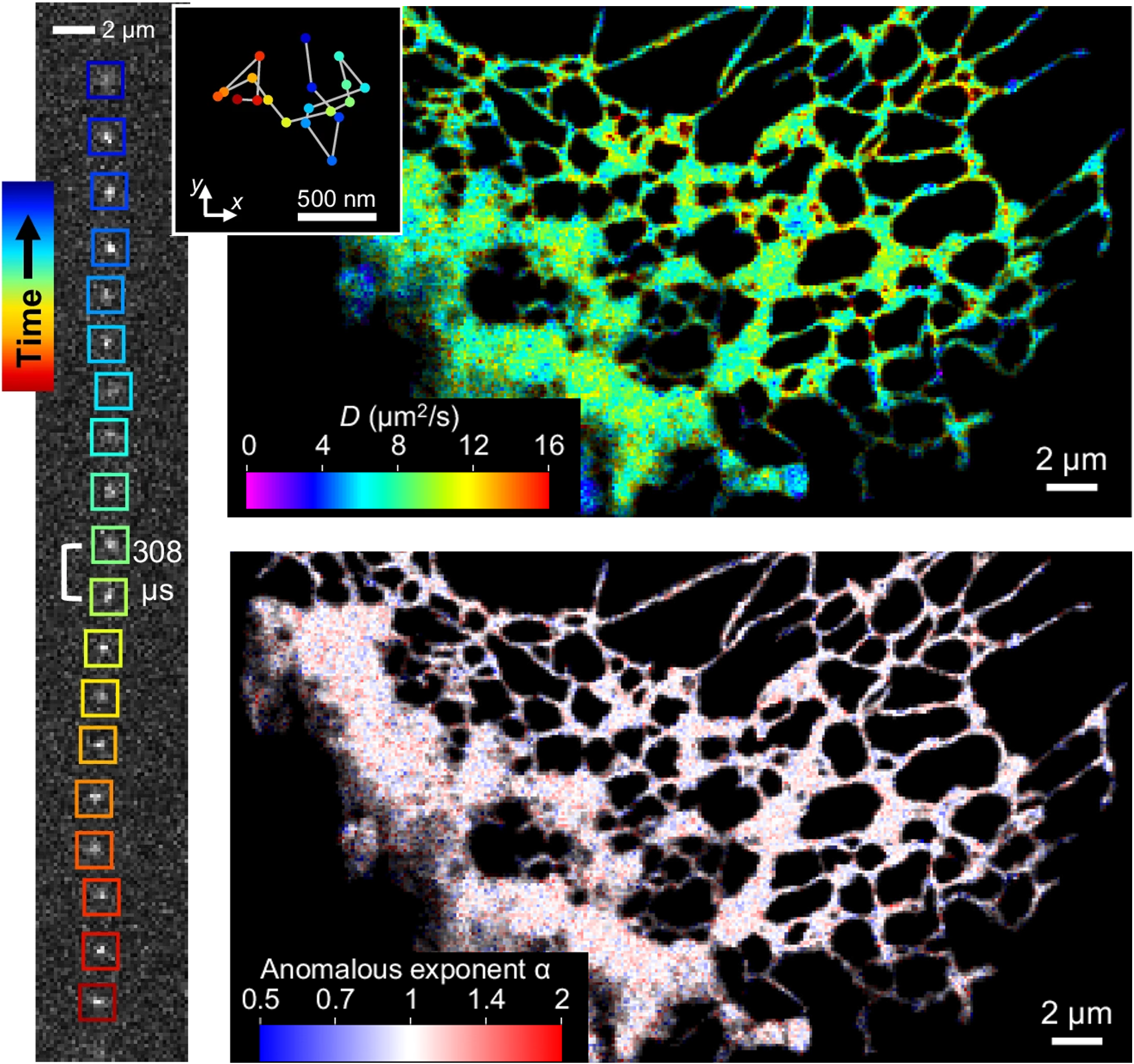
Wide-field single-molecule tracking is often limited by the 10 ms camera frame time. We introduce SpeedyTrack, which directly enables microsecond wide-field single-molecule tracking/imaging on common setups. Harnessing the native sub-microsecond vertical charge shifting capability of EM-CCDs, SpeedyTrack staggers wide-field single-molecule images along the CCD chip at 10-row spacings between consecutive timepoints, effectively projecting the time domain to the spatial domain. Wide-field tracking is achieved for molecules diffusing at up to 1000 µm2/s at 50 µs temporal resolutions for >30 timepoints. Concurrent Förster resonance energy transfer measurements further elucidate molecular states. By implementing temporally patterned vertical shifting, VS-SpeedyTrack next deconvolves the spatial and temporal information to map trajectories at the super-resolution level, resolving the diffusion mode of a fluorescent protein in live cells with nanoscale resolution. Without modifications to existing optics or electronics, SpeedyTrack provides a facile solution to the microsecond tracking of single molecules and their super-resolution mapping in the wide field.
2024
- Megan A. Steves and Ke XuLight: Science & Applications, 2024
"News and Views" article. The local quality of super-resolution microscopy images can be assessed and mapped by rolling Fourier ring correlation, even when image quality varies within a single image.
- Megan A. Steves, Changdong He, and Ke XuAnnual Review of Physical Chemistry, 2024
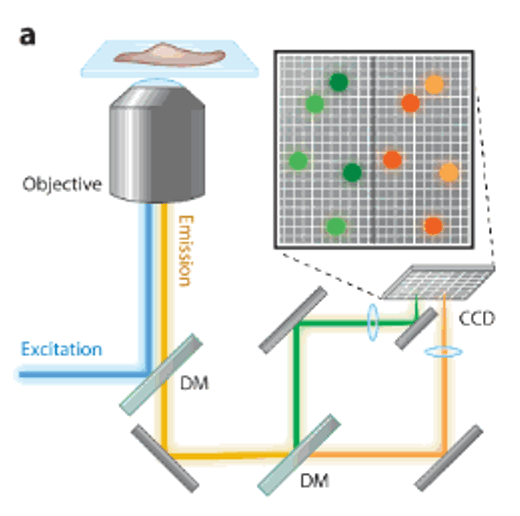
By superlocalizing the positions of millions of single molecules over many camera frames, a class of super-resolution fluorescence microscopy methods known as single-molecule localization microscopy (SMLM) has revolutionized how we understand subcellular structures over the past decade. In this review, we highlight emerging studies that transcend the outstanding structural (shape) information offered by SMLM to extract and map physicochemical parameters in living mammalian cells at single-molecule and super-resolution levels. By encoding/decoding high-dimensional information—such as emission and excitation spectra, motion, polarization, fluorescence lifetime, and beyond—for every molecule, and mass accumulating these measurements for millions of molecules, such multidimensional and multifunctional super-resolution approaches open new windows into intracellular architectures and dynamics, as well as their underlying biophysical rules, far beyond the diffraction limit.
2023
- Megan A. Steves and Kenneth L Knappenberger JrChemical & Biomedical Imaging, 2023
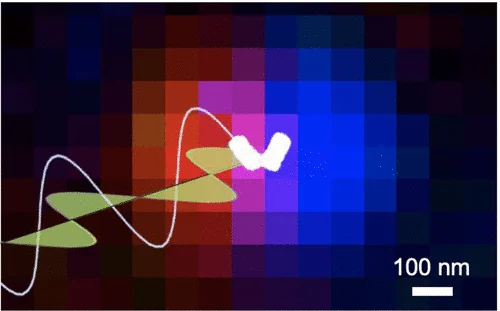
The development and use of interferometric variable-polarization Fourier transform nonlinear optical (vpFT-NLO) imaging to distinguish colloidal nanoparticles colocated within the optical diffraction limit is described. Using a collinear train of phase-stabilized pulse pairs with orthogonal electric field vectors, the polarization of nonlinear excitation fields are controllably modulated between linear, circular, and various elliptical states. Polarization modulation is achieved by precise control over the time delay separating the orthogonal pulse pairs to within hundreds of attoseconds. The resultant emission from gold nanorods is imaged to a 2D array detector and correlated to the excitation field polarization and plasmon resonance frequency by Fourier transformation. Gold nanorods with length-to-diameter aspect ratios of 2 support a longitudinal surface plasmon resonance at approximately 800 nm, which is resonant with the excitation fundamental carrier wavelength. Differences in the intrinsic linear and circular dichroism resulting from variation in their relative alignment with respect to the laboratory frame enable optical differentiation of nanorods separated within 50 nm, which is an approximate 5-fold improvement over the diffraction limit of the microscope. The experimental results are supported by analytical simulations. In addition to subdiffraction spatial resolution, the vpFT-NLO method intrinsically provides the polarization- and frequency-dependent resonance response of the nanoparticles─providing spectroscopic information content along with super-resolution imaging capabilities.
- Yu-Chuan Lin, Riccardo Torsi, Rehan Younas, Christopher L. Hinkle, Albert F. Rigosi, Heather M. Hill, Kunyan Zhang, Shengxi Huang, Christopher E. Shuck, Chen Chen, Yu-Hsiu Lin, Daniel Maldonado-Lopez, Jose L. Mendoza-Cortes, John Ferrier, Swastik Kar, Nadire Nayir, Siavash Rajabpour, Adri C. T. Van Duin, Xiwen Liu, Deep Jariwala, Jie Jiang, Jian Shi, Wouter Mortelmans, Rafael Jaramillo, Joao Marcelo J. Lopes, Roman Engel-Herbert, Anthony Trofe, Tetyana Ignatova, Seng Huat Lee, Zhiqiang Mao, Leticia Damian, Yuanxi Wang, Megan A. Steves, Kenneth L. Knappenberger, Zhengtianye Wang, Stephanie Law, George Bepete, Da Zhou, Jiang-Xiazi Lin, Mathias S. Scheurer, Jia Li, Pengjie Wang, Guo Yu, Sanfeng Wu, Deji Akinwande, Joan M. Redwing, Mauricio Terrones, and Joshua A. RobinsonACS nano, 2023
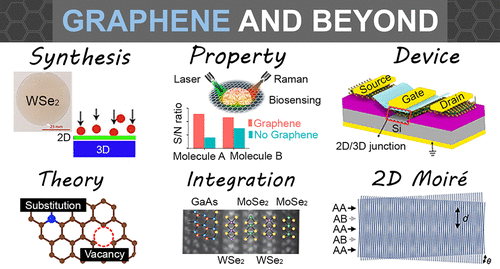
Two-dimensional (2D) material research is rapidly evolving to broaden the spectrum of emergent 2D systems. Here, we review recent advances in the theory, synthesis, characterization, device, and quantum physics of 2D materials and their heterostructures. First, we shed insight into modeling of defects and intercalants, focusing on their formation pathways and strategic functionalities. We also review machine learning for synthesis and sensing applications of 2D materials. In addition, we highlight important development in the synthesis, processing, and characterization of various 2D materials (e.g., MXnenes, magnetic compounds, epitaxial layers, low-symmetry crystals, etc.) and discuss oxidation and strain gradient engineering in 2D materials. Next, we discuss the optical and phonon properties of 2D materials controlled by material inhomogeneity and give examples of multidimensional imaging and biosensing equipped with machine learning analysis based on 2D platforms. We then provide updates on mix-dimensional heterostructures using 2D building blocks for next-generation logic/memory devices and the quantum anomalous Hall devices of high-quality magnetic topological insulators, followed by advances in small twist-angle homojunctions and their exciting quantum transport. Finally, we provide the perspectives and future work on several topics mentioned in this review.
2022
- Megan A. Steves and Kenneth L KnappenbergerThe Journal of Chemical Physics, 2022

Fourier transform nonlinear optical microscopy is used to perform nonlinear spectroscopy of single gold nanorods in an imaging platform, which enables sub-diffraction spatial resolution. The nonlinear optical signal is detected as a function of the time delay between two phase-locked pulses, forming an interferogram that can be used to retrieve the resonant response of the nanoparticles. Detection of the nonlinear signal through a microscopy platform enables wide-field hyperspectral imaging of the longitudinal plasmon resonances in individual gold nanorods. Super-resolution capabilities are demonstrated by distinguishing multiple nanorods that are co-located within the optical diffraction limit and are spatially separated by only tens of nanometers. The positions and resonance energies obtained through Fourier transform nonlinear optical microscopy agree with the relative positions and aspect ratios deduced from electron microscopy.
- Megan A. Steves, Ali Jawaid, Ariel Struzyk, Riccardo Torsi, Joshua A Robinson, Richard A Vaia, and Kenneth L Knappenberger JrThe Journal of Physical Chemistry C, 2022

Nanomaterials are promising alternatives to traditional bulk crystals for nonlinear optics and energy conversion materials. In this study, we report the observation of saturable second harmonic generation and high-order (up to 10th) multiphoton photoluminescence in colloidal MoS2 nanoflakes prepared by redox exfoliation which generates polyoxometalate clusters. Fourier transform nonlinear optical spectroscopy enabled the resolution of these high-order signals through two-dimensional nonlinear excitation/detection correlation spectra. Complementary modeling of the nonlinear interferograms suggested mechanisms for the observed high-order signals, which involve saturation of transitions resonant with the harmonic energy and multiple competing orders of multiphoton absorption. The saturable second harmonic generation and high-order multiphoton photoluminescence, which were not observed in MoS2 prepared by chemical vapor deposition, are related to the formation of polyoxometalate clusters during the redox exfoliation process. Further studies demonstrated that polyoxometalates can induce high-order nonlinear optical effects in other colloidal semiconductors with resonances at the harmonic energy, suggesting a general route to drastically alter the nonlinear optical response of nanomaterials with molecular adsorbates. This response is due in part to the interfacial charge transfer between polyoxometalate species and the nanomaterial. Fourier transform nonlinear optical spectroscopy offers a route to resolving the effects of molecular adsorbates, which are obscured in traditional nonlinear optical measurements.
- Akhil Dodda, Darsith Jayachandran, Andrew Pannone, Nicholas Trainor, Sergei P Stepanoff, Megan A Steves, Shiva Subbulakshmi Radhakrishnan, Saiphaneendra Bachu, Claudio W Ordonez, Jeffrey R Shallenberger, and othersNature Materials, 2022
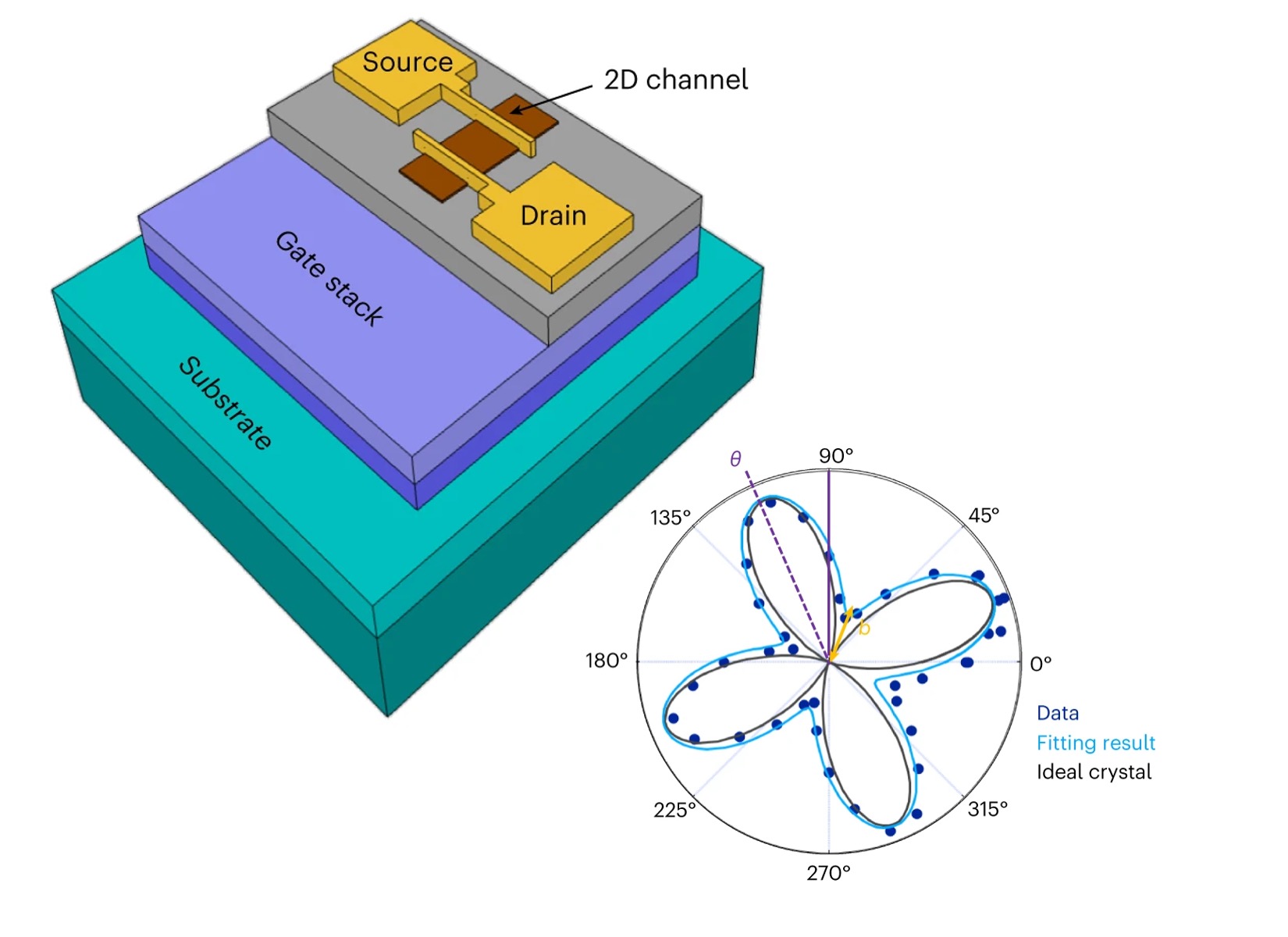
In-sensor processing, which can reduce the energy and hardware burden for many machine vision applications, is currently lacking in state-of-the-art active pixel sensor (APS) technology. Photosensitive and semiconducting two-dimensional (2D) materials can bridge this technology gap by integrating image capture (sense) and image processing (compute) capabilities in a single device. Here, we introduce a 2D APS technology based on a monolayer MoS2 phototransistor array, where each pixel uses a single programmable phototransistor, leading to a substantial reduction in footprint (900 pixels in ∼0.09 cm2) and energy consumption (100s of fJ per pixel). By exploiting gate-tunable persistent photoconductivity, we achieve a responsivity of ∼3.6 × 10⁷ A W−1, specific detectivity of ∼5.6 × 10¹³ Jones, spectral uniformity, a high dynamic range of ∼80 dB and in-sensor de-noising capabilities. Further, we demonstrate near-ideal yield and uniformity in photoresponse across the 2D APS array.
- Megan A. Steves and Kenneth L Knappenberger JrACS Physical Chemistry Au, 2022

Fourier transform nonlinear optics (FT-NLO) is a powerful experimental physical chemistry tool that provides insightful spectroscopic and imaging data. FT-NLO has revealed key steps in both intramolecular and intermolecular energy flow. Using phase-stabilized pulse sequences, FT-NLO is employed to resolve coherence dynamics in molecules and nanoparticle colloids. Recent advances in time-domain NLO interferometry using collinear beam geometries makes determination of molecular and material linear and nonlinear excitation spectra, homogeneous line width, and nonlinear excitation pathways straightforward. When combined with optical microscopy, rapid acquisition of hyperspectral images with the information content of FT-NLO spectroscopy is possible. With FT-NLO microscopy, molecules and nanoparticles colocated within the optical diffraction limit can be distinguished based on their excitation spectra. The suitability of certain nonlinear signals for statistical localization present exciting prospects for using FT-NLO to visualize energy flow on chemically relevant length scales. In this tutorial review, descriptions of FT-NLO experimental implementations are provided along with theoretical formalisms for obtaining spectral information from time-domain data. Select case studies that illustrate the use of FT-NLO are presented. Finally, strategies for extending super-resolution imaging capabilities based on polarization-selective spectroscopy are offered.
2021
- Megan A. Steves, Siavash Rajabpour, Ke Wang, Chengye Dong, Wen He, Su Ying Quek, Joshua A Robinson, and Kenneth L Knappenberger JrACS nano, 2021
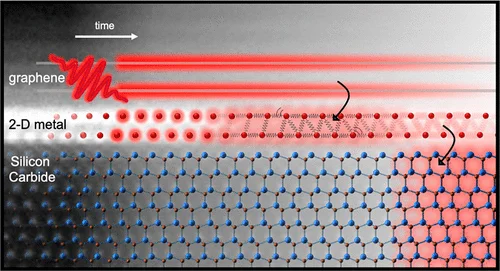
The electron dynamics of atomically thin 2-D polar metal heterostructures, which consisted of a few crystalline metal atomic layers intercalated between hexagonal silicon carbide and graphene grown from the silicon carbide, were studied using nearly degenerate transient absorption spectroscopy. Optical pumping created charge carriers in both the 2-D metals and graphene components. Wavelength-dependent probing suggests that graphene-to-metal carrier transfer occurred on a sub-picosecond time scale. Following rapid (<300 fs) carrier–carrier scattering, charge carriers monitored through the metal interband transition relaxed through several consecutive cooling mechanisms that included sub-picosecond carrier–phonon scattering and dissipation to the silicon carbide substrate over tens of picoseconds. By studying 2-D In, 2-D Ga, and a Ga/In alloy, we resolved accelerated electron–phonon scattering rates upon alloy formation as well as structural influences on the excitation of in-plane phonon shear modes. More rapid cooling in alloys is attributed to increased lattice disorder, which was observed through correlative polarization-resolved second harmonic generation and electron microscopy. This connection between the electronic relaxation rates, far-field optical responses, and metal lattice disorder is made possible by the intimate relation between nonlinear optical properties and atomic-level structure in these materials. These studies provided insights into electronic carrier dynamics in 2-D crystalline elemental metals, including resolving contributions from specific components of a 2-D metal-containing heterojunction. The correlative ultrafast spectroscopy and nonlinear microscopy results suggest that the energy dissipation rates can be tuned through atomic-level structures.
2020
- Megan A. Steves, Yuanxi Wang, Natalie Briggs, Tian Zhao, Hesham El-Sherif, Brian M Bersch, Shruti Subramanian, Chengye Dong, Timothy Bowen, Ana De La Fuente Duran, and othersNano letters, 2020
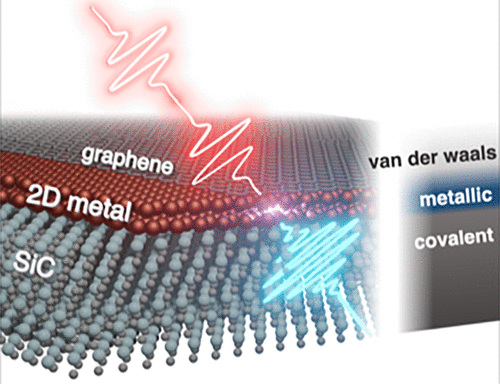
Near-infrared-to-visible second harmonic generation from air-stable two-dimensional polar gallium and indium metals is described. The photonic properties of 2D metals, including the largest second-order susceptibilities reported for metals (approaching 10 nm/V), are determined by the atomic-level structure and bonding of two-to-three-atom-thick crystalline films. The bond character evolved from covalent to metallic over a few atomic layers, changing the out-of-plane metal–metal bond distances by approximately ten percent (0.2 Å), resulting in symmetry breaking and an axial electrostatic dipole that mediated the large nonlinear response. Two different orientations of the crystalline metal atoms, corresponding to lateral displacements <2 Å, persisted in separate micrometer-scale terraces to generate distinct harmonic polarizations. This strong atomic-level structure–property interplay suggests metal photonic properties can be controlled with atomic precision.
- Niklas Hellgren, Megan A. Steves, Jeffrey Shallenberger, Sarah K O’Boyle, Emily Mellott, and Alison R NobleApplied Surface Science, 2020
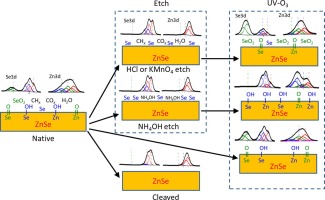
The surface chemistry of zinc selenide (ZnSe) was studied by X-ray photoelectron spectroscopy (XPS) as a function of various surface treatments, including etching in solutions of hydrochloric acid (HCl), potassium permanganate:sulfuric acid (KMnO4:H2SO4), and ammonium hydroxide:ethanol (NH4OH:C2H6O). Samples were also treated in a UV-ozone (UV-O3) chamber, which removes organic contamination, but increases oxidation. All spectra were referenced to that of a clean ZnSe surface, obtained by cleaving a sample in vacuum. By applying consistent peak fitting to all samples, and correlating the trends for each component, we are able to distinguish between various oxide and hydroxide contributions. All etches preferentially remove Zn, leaving a Se-rich surface with Zn/Se 0.8, and virtually all ZnO and SeO2 is removed, although oxygen and carbon is detected due reabsorption from the etch solution and air exposure. After UV-O3-treatment, the signals for ZnO and SeO2 are significantly increased for the HCl and KMnO4:H2SO4-etched samples. However, on the NH4OH:C2H6O-etched sample, hydrogen-containing species are likely trapped in the amorphous Se top layer, which after UV-O3 treatment contribute to the formation of SeOH and ZnOH, rather than SeO2 and ZnO, as well as desorption of surplus Se though H2Se, resulting in a close to stoichiometric ZnSe.
2019
- Megan A. Steves*, Hongjun Zheng*, and Kenneth L Knappenberger JrOptics Letters, 2019
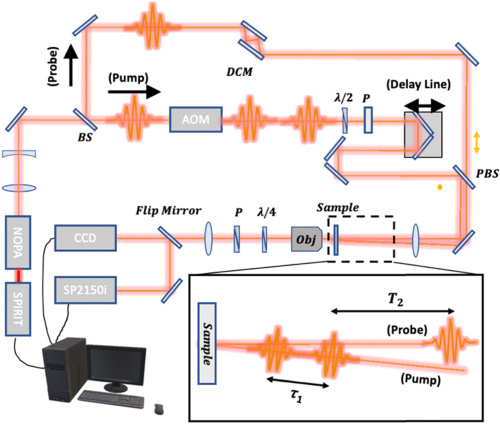
A multimodal method for correlating linear and nonlinear optical spectra with a spatial resolution is presented. Using a partially collinear pump-probe geometry and two-frame phase-cycling, ultrafast two-dimensional electronic spectroscopy (2DES) was performed with transverse-spatial and temporal resolutions of 17 μm and 80 fs, respectively. Time-resolved 2DES maps were spatially correlated with linear extinction spectra obtained in the same imaging platform, enabling the examination of state-resolved dynamics of spatially heterogeneous materials. Thin films of aggregated CdSe nanocrystals were studied to demonstrate the combined spectral, temporal, and imaging capabilities of this method.
2018
- Tian Zhao, Megan A. Steves, Brian S Chapman, Joseph B Tracy, and Kenneth L Knappenberger JrAnalytical chemistry, 2018
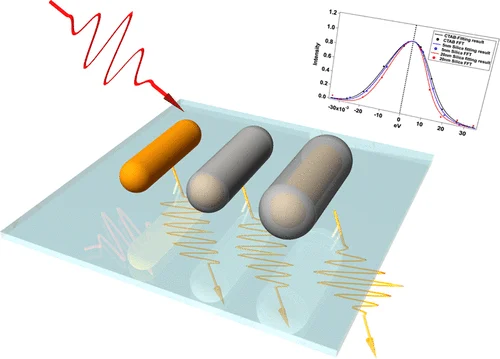
A method for quantification of plasmon mode quality factors using a novel collinear single-beam interferometric nonlinear optical (INLO) microscope is described. A collinear sequence of phase-stabilized femtosecond laser pulses generated by a series of birefringent optics is used for the INLO experiments. Our experimental designs allow for the creation of pulse replicas (800 nm carrier wave) that exhibit interpulse phase stability of 33 mrad (approximately 14 attoseonds), which can be incrementally temporally delayed from attosecond to picosecond time scales. This temporal tuning range allows for resonant electronic Fourier spectroscopy of plasmonic gold nanoparticles. The collinear geometry of the pulse pair facilitates integration into an optical microscopy platform capable of single-nanoparticle sensitivity. Analysis of the Fourier spectra in the frequency domain yields the sample plasmon resonant response and homogeneous line width; the latter provided quantification of the plasmon mode quality factor. We have applied this INLO approach to quantitatively determine the influence of encapsulation of gold nanorods with silica shells on plasmon quality factors. We have studied a series of three gold nanorod samples, distinguished by surface passivation. These include cetyltrimethylammonium bromide (CTAB)-passivated nanorods, as well as ones encapsulated by 5 and 20 nanometer-thick silica shells. The Q-factor results show a trend of increasing quality factor, increasing by 46% from 54 ± 8 to 79 ± 9, in going from CTAB- to 20 nm silica-coated AuNRs. The straightforward method of INLO enables analysis of plasmon responses to environmental influences, such as analyte binding and solvent effects, as well as quantification of structure-specific plasmon coherence dynamics.